The 10th of Muharram ul Haram and Ashurah
In 2010 Ashurah will be observed on 17th or 18th of December subject to the sighting of moon.
The Islamic year starts with Muharram ul Haram, the first month of the Hijri Calendar. Muharram ul Haram is one of the four months of Islamic Lunar Calendar declared sacred by Allah (SWT) in the Holy Qur'an. The other three months of Islamic Lunar Calendar are Rajab al-Murajab, Dhu al-Qa'dah and Dhu al-Hijjah.
In the Holy Qur'an verse 59 of Surah An Nisa, Allah (SWT) says:
"O you who believe! Obey Allah, and obey the Messenger and "Ulil Amr" (Those who are authorized to command) from among you."
While followers of other religions spend their beginning month in rubbish sort of ways to celebrate, the first month of Islam teaches us lessons of caution, good counselling, knowledge of Allah (SWT), sacrifice, selflessness, patience and seeking the pleasure of Allah (SWT).
The tenth day of Muharram (Ashurah) has many unique virtues and characteristics. Allah (SWT) created the heavens and the earth on this blessed day. On this day He gave His countless blessings and bounties to many of His Prophets and delivered them from the command of their enemies.
Allah (SWT) created Hazrat Adam (Alaihis-Salam) in this month, pardoned him of his mistake, and Hazrat Noah’s (Alaihis-Salam) Ark landed successfully on Mount Judi, and he saved Hazrat Ibrahim (Alaihis-Salam) from fire and rescued Hazrat Musa (Alaihis-Salam) from Pharaoh.
Brief Background of Karbala Incident
Hazrat Imam Hussain (Radi Allah Anhu) was the youngest son of Hazrat Ali (Radi Allah Anhu) by Prophet Hazrat Muhammad (peace and blessings of Allah be upon him)'s daughter Hazrat Fatimah (Radi Allah Anha). Hazrat Ali (Radi Allah Anhu) was the fourth Caliph of Islam. When Yazid, son of Muawiyah, became Caliph he demanded faithfulness from Hazrat Imam Hussain (Radi Allah Anhu). He refused because of Yazid's wrong doings. Eventually he had to deal with Yazid. It had to be done, to rule out any further deterioration and eventual disintegration of Islam.
Hazrat Imam Hussain (Radi Allah Anhu) strengthened his campaign. He was determined to accomplish his mission by means more vigorous than had hitherto been used. He deserves full credit for the exemplary courage and composure with which he handled the ugly situation. He did not resort to aggression yet firmly resisted Yazid's bluster.
It all started with claims of Khilafat (Caliphate).
Hazrat Muhammad (peace and blessings of Allah be upon him) was ill, and death drew near. When Hazrat Muhammad (peace and blessings of Allah be upon him) was asked to choose a successor (leader) of the Muslims, he refused. When death took this great soul, Muslims were left leaderless.
It is said that at the time when Hazrat Muhammad (peace and blessings of Allah be upon him) died, Hazrat Umar (Radi Allah Anhu) was telling others that Hazrat Muhammad (peace and blessings of Allah be upon him), who meant so much to them, could not die. Abu Bakr (Radi Allah Anhu) at this time went to Hazrat Muhammad’s (peace and blessings of Allah be upon him) home and found his body lying in the laps of Ayesha (Radi Allah Anha). Abu Bakr (Radi Allah Anhu) came back, and tried to tell Hazrat Umar (Radi Allah Anhu) in private what has happened. Seeing that Hazrat Umar (Radi Allah Anhu) was not willing to pay attention, he declared that the prophet (peace and blessings upon him) has passed away, and recited this verse from the Qur’an: “Muhammad is but a prophet, (prophets) like whom has passed away in the past…“
Abu Bakr (Radi Allah Anhu) was elected the new leader of the Ummah (The Muslim community). A part of the Muslims wanted Hazrat Ali (may Allah be pleased with him) ibn Abu Talib, who was of the same blood as Hazrat Muhammad (peace and blessings of Allah be upon him) to be the new leader. Some people (who later were to become the Shias) believed that only people of Hazrat Muhammad’s (peace and blessings of Allah be upon him) blood should be leaders of the community. This is the main cause of friction between the Shias and the Sunnis. However, as Abu Bakr (Radi Allah Anhu) was elected, Hazrat Ali (Radi Allah Anhu) apparently accepted the new leader with some reservation (this is disputed). Upon being elected Abu Bakr (Radi Allah Anhu) gave this wonderful short speech which should be the spirit of modern day democracies:
“The weak among you shall be strong with me until their rights have been vindicated; and the strong among you shall be weak with me until, if the Lord wills, I have taken what is due from them… Obey me as long as I obey God and His Messenger. When I disobey Him and His Prophet, then obey me not.”
After Abu Bakr (Radi Allah Anhu)’s death (634 AD), Hazrat Umar (Radi Allah Anhu) was elected the caliph (assassinated, in 644 AD), followed by Hazrat Usman (Radi Allah Anhu) (again assassinated, 656 AD), followed by Hazrat Ali (Radi Allah Anhu) ibn Abu Talib (until 661, when he was assassinated while offering his prayers). These four leaders are called the four rightly guided leaders, or Al-Rashidun.
Hazrat Ali (Radi Allah Anhu)’s son Imam Hassan (Radi Allah Anhu) was a contestant for the Caliphate. The Syrian Muawiyah, who had been fighting Hazrat Ali (Radi Allah Anhu) for the Caliphate, now started preparing for a war. Imam Hassan (Radi Allah Anhu) avoided war by signing an agreement with him giving Muawiyah the Caliphate and thus saving bloodshed. Hassan (Radi Allah Anhu) was later poisoned to death.
After Muawiyah’s death, it was expected that Imam Hussain (Radi Allah Anhu) (younger brother of Imam Hassan, Radi Allah Anhu) will contest for caliphate. But Muawiyah, before his death, nominated his son Yazid for the Caliphate. Thus the post of Caliphate became hereditary from this point. Imam Hussain (Radi Allah Anhu) raised in revolution and was crushed and martyred at deserts of Karbala.
On the occasion of 10th of Muharram the day of Imam Hussain (Radi Allah Anhu)’s martyrdom is remembered. Muslims mourn the death of Imam Hussain (Radi Allah Anhu). Imam Hussain (Radi Allah Anhu) had to fight, for justice, even though he was too less in numbers (mythology say 72/73 on Imam Hussain (Radi Allah Anhu)’s side fought over a hundred thousands).
Dua-e-Ashurah - An insurance for a year’s Life
Hazrat Imam Zainul Abidain (Radi Allah Anhu) reports that who ever recites this dua( Dua-e- Ashurah) on the tenth of Muharram, any time after sunrise and before sunset, or listens to its recitation from someone else, Allah (SWT) will certainly make it an insurance for a years’ life for him, by keeping death away from him. However, if one is to become the victim of death in that year, they will by some strange coincidence not remember to recite it.
Nafl Salat for the Eve of Ashurah
On the eve of Ashurah offer 4 rakats Nafl Salat as follows: In every rakat after Surah Fateha recite "Ayetul Kursi" once and Surah Ikhlas 3 times. After completing this Namaz recite Surah Ikhlas 100 times. Allah (SWT) will purify such a person of all their sins and grant them endless bounties and blessings in paradise.
The Fast of Ashurah
On the 9th and 10th of Muharram, one should fast. If it is not possible to fast on both days, then every effort should be made to fast on the 10th day of Muharram, as there is great reward for this fast. (Muslim Shareef).
The following are some of the desirable acts one should do on the day of Ashurah:
1. To observe fast on this day.
2. To give as much charity as you can afford.
3. To perform Nafl Salat prayers.
4. To recite Surah Ikhlas 1000 times.
5. To visit and be in the company of pious Ulema.
6. To place a hand of affection on an orphan’s head.
7. To give generously to one’s relatives.
8. To put surma in one’s eyes.
9. To take a bath.
10. To cut one’s nails.
11. To visit the sick.
12. To establish friendly ties with one’s enemies.
13. To recite Dua-e- Ashurah
14. To visit the shrines of Awliyas and the graves of Muslims.
Hazrat Abdullah bin Masood (Radi Allah Anhu), a Companion of the Holy Prophet Hazrat Muhammad (peace and blessings of Allah be upon him) reports the following saying of the Messenger of Allah (SWT),
"Whosoever prepares ample food and drink for his family on this sacred day and delights in feeding them generously, Allah (SWT) will increase His provisions for that year and place much blessings and good therein."
Another worth-reading article:
To read in Urdu …. “Mah-e-Muharram ul Haram Aur Ashourah ki Haqeeqat” a beautiful article by Justice (Rtd.) Taqi Usmani:


 , Muslims commemorate and remember Ibrahim (A.S.)'s trials, by themselves slaughtering an animal such as a sheep, camel, or goat. This action is very often misunderstood by those outside the faith.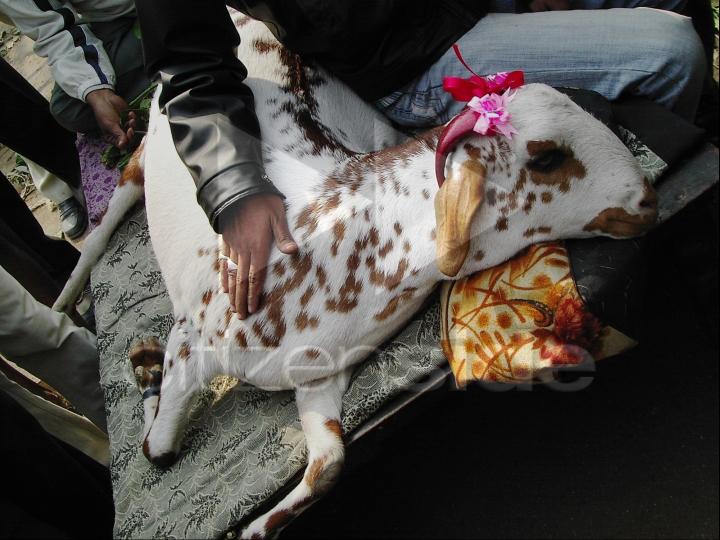


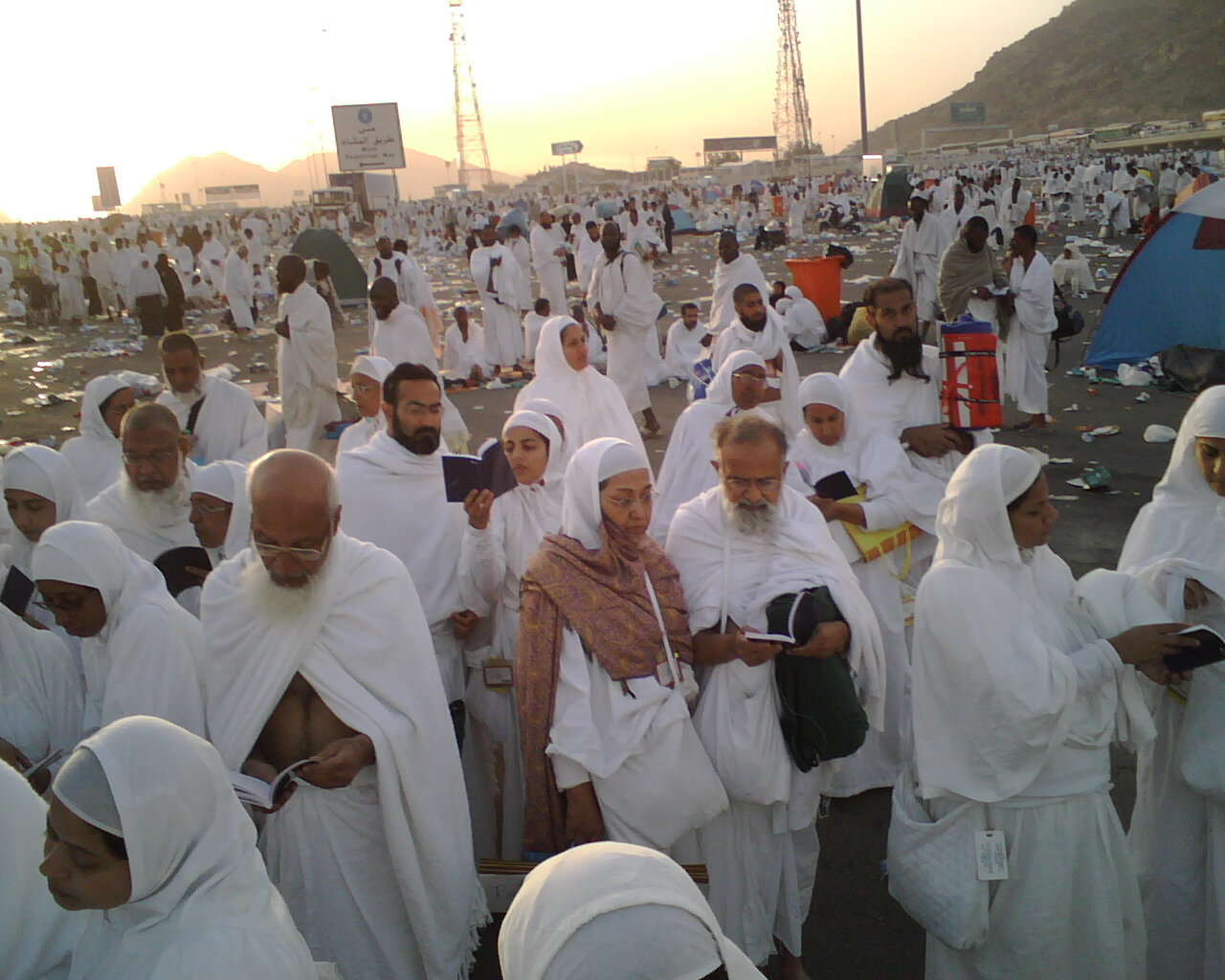


 In a state of purity, he goes to pray in


