Showing posts with label Lahore Fort. Show all posts

Friday, October 1, 2010

Shahi Qila


Introduction to Shahi Qila:

The Shahi Qila is one majestic palace in Burhanpur, located to the east of the Tapti River. Litle of it remains today as the Shahi Qila is mostly in ruins now. However, the parts of the Palace that still stands displays amazing works of sculpture and exquisite carvings.

Location:

The Lahore Fort, locally known as Shahi Qila, is located in the northwestern corner of Lahore’s Walled City. The majestic edifice is the result of many centuries’ work. According to the Pakistani historian Wali Ullah Khan, the earliest reference to the Fort comes in the history of Lahur (Lahore) compiled by Al-Biruni, which refers to a fort constructed in the early 11th century. Munshi Sujan Rae Bhandar, author of the Khulasa-tut-Tawarikh records that Malik Ayaz, a lieutenant of Sultan Mahmud, built a masonry fort at Lahore and inhabited the city. It is generally believed that present Lahore Fort is the same fort, which was damaged by the Mongols in 1241 and again in 1398 by a detachment of Timur’s army, then rebuilt in 1421 by Sayyid, son of Khizr Khan.

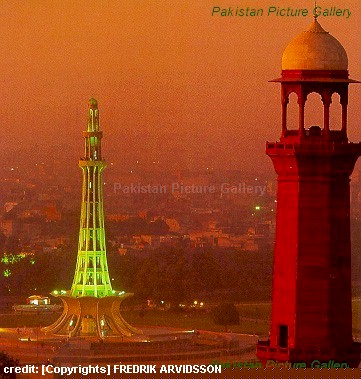
Minar-e-Pakistan, 60 meters tall and a relatively new landmark in Lahore is on the one side of the Fort and the Badshahi (Imperial) Mosque and deMontmorency – oldest Dental Collage in Pakistan — are across the courtyard from Alamgir Gate of the Fort. History and heritage are kept alive in the Lahore Fort, a protected national monument on UNESCO’s list of World Heritage sites, in the form of Masti Gate, Diwan-i-Am, Moti Masjid, Lal Burg, Naulakha Pavilion and Shish Mahal. The Fort contains marble palaces decorated with mosaics and gilt. The elegance of the splendid monument is matchless.

History of Shahi Qila:

History of the Shahi Qila states that it was resided by Shah Jahan, at a time when he was the governor of Burhanpur. Shah Jahan became so fond of the fort that it was here, in Shahi Qila that he establishes his court for the first three years of his ascending the throne. It is said that his wife, famous as Mumtaz Mahal, of the Taj Mahal fame dies here in childbirth. The Fort was extensively refurbished, extended and upgraded during the Mughal era. This is why it is rightly attributed as one of the gems of the Mughal civilization. Emperor Jalal-ud-Din Akbar, Jahangir, Shah Jahan, and Aurangzeb all added to it. During the period of Sikh occupation, Ranjit Singh added several pavilions on the upper ramparts. Some modifications to the Fort were made during the British period beginning in 1846 for housing facilities for colonial functions. Those modifications have been reverted and efforts made to bring the Fort back in its pre 1846 appearance.

Description of Shahi Qila:

The massive fortification walls, built by Emperor Akbar in the 1560s, tower over the older part of Lahore. The huge rectangle they define, 380 by 330 meters (1,250 by 1,080 feet), is filled with buildings from a variety of periods. The main gates are located alongside the centre of the western and eastern walls. A tour of the Fort in one go is like eating an elephant in one gulp, so it merits to be seen slowly like a child looks at a huge mural.

Enter the Fort through Alamgiri Gate and you find yourself in a Maktab Khana (Clerks’ House). It is a small cloistered court surrounded by arcades in which clerks use to sit, recording the names of visitors. The inscription outside tells that King Jahangir built Maktab Khana in 1618. Another gateway is the Masti gate – a corruption of Masjid Gate – named after the mosque, which still stands outside the Gate. Built in 1566, the Gate only assumed its present name after the construction of the nearby Mosque in 1641 by Empress Maryam Zamani, mother of King Jahangir.

Inside, the Diwan-e-Am (Hall of Public Audience) is an open pavilion with 40 pillars built in 1631-32 by Emperor Shah Jahan, in order to shelter his subjects when they appeared before him. Originally, Akbar had built the marble pavilion and red sandstone balcony that is at the back of the Diwan-e-Am. Here the emperor appeared daily before the public who, in his days, used to gather under a canvas canopy. The serpentine sandstone brackets are typical of Akbar’s commissions, with the depiction of animals showing Hindu influence. His two-stored Diwan-e-Khas (Hall of Private Audience), built in 1566, is behind the balcony and is reached by stairs on the right. The Khwabgah-e-Jahangir (Jahangir’s Room of Dreams) is the main building running the length of the north side of Jahangir’s Quadrangle and is typical of Jahangir’s period in its austerity. It is now a museum, containing some excellent illustrated manuscripts (including the Akbar Nama – the daily chronicle of Akbar’s reign), some beautiful calligraphy, good miniature paintings and a collection of Mughal coins.

Moti Masjid was built in the Shah Jahan era about 1645 A.D., and is one of the of three Moti (Pearl) Mosques built in the Mughal period, the others being the one at Agra Fort and another at Delhi built by Aurangzeb. The Moti Masjid was used as a treasury during the Sikh period.

The Lal Burj, an octagonal tower, was constructed in 1617-31. Intended as a summer pavilion, it is decorated on the outside with mosaic and filigree while the interior is filled with paintings from the Sikh period. The lower two stories were built during Jahangir and Shah Jahan’s reign, while the upper story is a Sikh addition.

The Bungla, popularly called the Naulakha pavilion – edifice, which was built at the cost of nine lakhs (900,000 was a lot of money then), is a unique marble pavilion with a curved roof. It was constructed during Shah Jahan’s reign in 1631-32 A.D. for the Empress when she resided at Lahore. It is often considered one of the finest buildings in Pakistan. The Shish Mahal is a multi-storied structure north of the Bungla. It is also part of the royal residence constructed by Shah Jahan in 1631-1632. The mirror work has been renovated lately.


Tuesday, September 28, 2010

Chauburji Lahore

Importance:

For every Lahori, this beautiful monument is a familiar structure and now lies in the middle of a thriving commercial area. Shops, restaurants and offices circle the intersection where Chauburji stands reminiscent of Princess Zeb-un-Nissa’s once grand and extensive gardens.

History:

Built around 1646 AD by Zebinda Begum or Princess Zeb-un-Nissa, daughter of the Mughal Emperor Aurangzeb Alamgir, Chauburji’s current dilapidated state is not a new sight. Go to the Shalimar Gardens; Emperor Jahangir’s Tomb; Queen Noor Jahan’s Tomb, all these places were once crown jewels among the ‘City of Gardens’ i.e. Lahore’s green heavens and now there hardly is anything left in color there.

Chauburji or Chouburji was the grand entrance to a lovely Mughal garden on Multan Road in Lahore. The garden, which is no more, is said to have been laid out by Princess Zeb-un-Nisa Makhfi, daughter of Emperor Aurangzeb Alamgir and a recognized poetess of her time.

Princess Zebinda Begum or Zeb-un-Nisa:

Princess Zeb-un-Nisa is an intriguing figure. She never married, but legend has it that she fell in love with an Afghan soldier whom Aurangzeb had killed. Zeb-un-Nisa, or Zebinda Begum, as she is also known to historians, was a highly talented woman. She wrote poetry and took a deep interest in architecture. In 1646 she decided to have a beautiful garden laid out in Lahore.

Design:

The porcelain mosaic which decorates the walls, though most of it has been chipped away, is of high quality. The outer walls are brilliantly enamelled and decorated with blue and green encaustic tiles and frescoes of exquisite beauty. The motifs most used are those of willowy cypresses, bowls of fruit, and winding trellises. Originally, the gateway had four towers, as well as a central dome, but over the years the dome collapsed and one of the hexagonal towers crumbled away, leaving a truncated gateway with chipped enamel and four rooms within. From these, not just the frescoes but even the plaster vanished.


The uppermost part of the building has a passage from the Holy Quran inscribed on it in Arabic letters of blue colour worked in porcelain. At the end is written the year of its foundation, 1646 AD. Above the arch are inscribed the following verses in Persian: "This garden, on the pattern of the Garden of Paradise, has been founded. The garden has been bestowed on Mian Bai. By the bounty of Zebinda Begum, the lady of the age." On either side of the arches north and south of the middle arch is inscribed the word "God" in bl
ue Arabic letters enclosed by a circle.

Meaning of Word Chauburji:


The gateway has recently been restored, and a roundabout has been constructed. The fourth tower has also been rebuilt, as without it the building would never have also been a Chauburji, which means "four minarets."


Monday, September 27, 2010

Minar-e-Pakistan – Lahore

History:

Minar-e-Pakistan is a tall minaret in Iqbal Park Lahore, built in commemoration of the Lahore Resolution. The minaret reflects a blend of Mughal and modern architecture, and is constructed on the site where on March 23, 1940, seven years before the formation of Pakistan, the Muslim League passed the Lahore Resolution (Qarardad-e-Lahore), demanding the creation of Pakistan. This was the first official declaration to establish a separate homeland for the Muslims living in the subcontinent. Pakistan now celebrates this day as a national holiday each year.

The monument attracts visitors from all over Pakistan, as well as the inhabitants of the Walled City of Lahore. The large public space around the monument is commonly used for political and public meetings, whereas Iqbal Park area is ever so popular among kite-flyovers.


Importance:

Minar-i-Pakistan is one of the most important national monuments of the country. The site where the Minar-e-Pakistan is built is the exact place where the historic Pakistan Resolution was passed in 1940. The Minar expresses the spirit of that movement. It is one of the few additions to a conglomeration of old monumental structures that are in Lahore that were mostly built by Mughals. The base of the structure takes the shape of a five point star and is enclosed within crescent shaped pools. The overall height is approximately sixty meters and the entire structure is constructed of rein
forced concrete and furbished with stone and marble walls and floors.

Design:

The tower was designed by Naseer-ud-Deen Murat Khan a Pakistani architect of (Daghestan) Russian descent,and structural engineer was Abdur Rahman Khan Niazi. The design approved by the President was built by Mian Abdul Khaliq and Company. The foundation stone was laid on March 23, 1960. The construction took eight years of time, and was completed in 1968. The Minar was completed on 31 October 1968 at an estimated cost of Rs. 7.5 million. The money was collected by imposing additional tax on the cinema and horse racing tickets. Today, the minaret provides a panoramic view to visitors who can climb up the stairs or through an elevator. The parks around the monument include marble fountains and an artificial lake.

Structure:

The base is about 8 meters above the ground. The tower rises about 60 meters on the base, thus the total height of minaret is about 72 meters above the ground. The unfolding petals of the flower-like base are 9 meters high. The diameter of the tower is about 97.5 meters (320 feet). The base platform is shaped like a five-pointed star and encloses two crescent shaped pools. There is a central spiral staircase rising up with 162 steps. The top-dome of the minaret is made of Stainless steel inlaid with fine glass pieces.

WHY we build it?

The structure is made of reinforced concrete, stones, and marble. The rostrum is built of patterned tiles, and faces the Badshahi Mosque. The base comprises four platforms. To symbolise humble beginnings of the freedom struggle, first platform is built with uncut Taxila stones, second platform is made of hammer-dressed stones, whereas third platform is of chiselled stones. Polished white marble at the fourth and final platform depicts the success of the Pakistan Movement . Mr. Mukhtar Masood a prolific writer and the then deputy commissioner of Lahore was responsible for the construction of this monument.

Cultural determinism may be all-embracing but it is not all-powerful. Men have imagination and creativity .They have personal will and, if they are not defeatist, they have inner freedom in the most enslaved circumstances. And it is not impertinent to say that they also have courage.

It is from the wellsprings of the past, with the freshness or its eternal waters that a nation drinks to revive its old and faltering heart. Monuments are a fountainhead of its reinvigoration, and they help supply nutrients to bind the sinews of National cohesion. They prove that a nation has heritage and history —and memory, and one without memory is without hope. The past is not merely a vanished tableau. It is the bedrock of the future.

A monument is less for the individual than for the collective psyche. That is why it usually stands not in a private sanctum but in public setting within the easy view of all. It is normally on high ground or platform, a source of pride and power, at once a shared spectacle and a shared experience. They represent heroes of Pakistan not only for its entire citizen but they stand equal of heroes in other lands. No challenge obtrudes on the universality of their cause except in the vainly disputations.

Founder of Pakistan said:

M A Jinnah, the Founding Father of Pakistan often said , is history continuous of struggle for freedom , freedom enjoyed , freedom lost , freedom regained , lost again , pursued again, regained , lost again.

Dr. Allama Iqbal said:

It is by rising to a fresh vision of his origin and future, his whence and whither, that man will eventually triumph over a society motivated by inhuman competition and a civilisation which has lost its spiritual unity by its inner conflict of religions and political values.”

This unending pulsating rhythm of Pakistan freedom struggle has been the distinctive character of Pakistan’s’ national life for centuries, and in the withering process not a few larger-than-life heroes Pakistan have produced but many.

Allama Iqbal thought about human freedom:

Pakistan have suffered more miseries from the European invaders, Consumerism, imperialism and terrorism, they have been badly battered repeatedly, and culturally marinated. They have been occupied, but in the real sense Pakistan remained unvanquished. The foreign entities may destroy their monuments, but not the memory.

Pakistan heroes have been fighting for freedom. To them freedom is more important than life itself, the latter is nothing without the former. Because of this, Pakistan’s history hinges on the twin values of sacrifice and valour in the Islamic pursuit of freedom. Dr. Allama Iqbal, an ardent advocate of the concept of human freedom and evolution explains the concept of tawh?i?d beautifully when he says, “Reality is essentially spirit,” yet he qualifies his belief by mentioning that there are degrees of reality reflecting degrees of spirit. He writes:

Indeed the evolution of life shows that, though in the beginning the mental is dominated by the physical, the mental as it grows in power, tends to dominate the physical and may eventually rise to a position of complete independence…

Goals:

Life can be sacrificed for freedom, but freedom cannot be sacrificed for life. Every individual has the Goal and duty of safeguarding that freedom. Even if it causes him his life. ” the metaphysical ego is the bearer of two main rights that is the right to life and freedom as determined by Divine Law. ”Dr. Allama Iqbal, believed that behind the process of evolution is the vital impulse (Bergson’s elan vital) of ‘ishq or love which is metaphysical in nature and which makes life grow towards higher evolutionary GOALS.

It is love that imparts colour to the tulip

It is love that agitates our life.

If you could rip open the heart of the earth

You would see love’s blood coursing through it.

Beneath this visible evolution of forms is the force of love which actualises all strivings, movement and progress. Things are so constituted that they hate non-existence and love the joy of individuality in various forms. The indeterminate matter, dead in itself, assumes or more properly is made to assume by the inner force of love, various forms and rises higher and higher in the scale of beauty.

But this

“Forward push to life cannot be called creative unless hitched to some goal.”

Iqbal believed that evolution has a goal. “In fact, the evolution or dissolution of life is dependent on how far the individual chooses to use his or her creative will and power. The perfect man of Iqbal’s conception is of muja?hid, one who is ready and willing to face the problems of life, culture and society as he is to face the problems of after-life, spiritual welfare and death.”

The past has already lost print as its exclusive rendition. This century and the next, the printed world will give way to the electronic image. Communication will largely be in visual flashes rather than in syllables. Is the age of banality at hand? Will history become insipidity? It may become artless—or on the other hand acquire character of a new art form? Or it will still remain a sculptural perfection signifying human, freedom and Islam in the eyes of Allah and the rest of the world? Would the memory of Dr. Allama Iqbal, Quaid – i – Azam) Muhammad Ali Jinnah, the great men and women, will become relics in a strange epoch of new paradigms? Would arduous nationhood be a thing of the past and their parched sacrifices be regarded as crude baubles? Would the joys become outdated, the sorrows and sadness not even recalled in the consciousness of the future Pakistan?.

“Arise and soar with the suns new born rays. To breathe new life into dying nights and days.”

(Allama Iqbal)


Tuesday, November 24, 2009

Lahore Fort----The Rich Traditions Of The Entire Mughal Architecture


The Lahore Fort, locally referred to as Shahi Qila (Urdu: شاهی قلعہ ) is citadel of the city of Lahore, Punjab, Pakistan. It is located in the northwestern corner of the Walled City of Lahore. The trapezoidal composition is spread over 20 hectares. Origins of the fort go as far back as antiquity, however, the existing base structure was built during the reign of Mughal emperor Akbar (1556-1605), and was regularly upgraded by subsequent rulers,having thirteen gates in all. Thus the fort manifests the rich traditions of the entire Mughal architecture. Some of the famous sites inside the fort include: Sheesh Mahal, Alamgiri Gate, Naulakha pavilion, and Moti Masjid. In 1981, the fort was inscribed as a UNESCO World Heritage Site along with the Shalimar Gardens (Lahore).

The origins of Lahore Fort are obscure and are traditionally based on various myths. However, during the excavation carried out in 1959 by the Department of Archaeology, in front of Diwan-e-Aam, a gold coin of Mahmood of Ghazni dated A.H. 416 (1025 A.D.) was found at a depth of 7.62 metres from the level of the lawns. Cultural layers continued to a further depth of 5 metres, giving strong indications.


that people had lived here, long before the conquest of Lahore by Mahmood in 1021 A.D. Further mention of the fort is traceable to Shahab-ud-din Muhammad Ghuri's successive invasions of Lahore from 1180 to 1186 A.D.

The strategic location of Lahore city between the Mughal territories and the strongholds of Kabul, Multan, and Kashmir required the dismantling of the old mud-fort and fortification with solid brick masonry. The strcucture is dominated by Persian influence that deepened with the successive refurbishments by subsequent emperors. The fort is clearly divided into two sections: first the administrative section, which is well connected with main entrances, and comprises larger garden areas and Diwan-e-Aam for royal audiences. The second - a private and concealed residential section - is divided into courts in the northern part, accessible through 'elephant gate'. It also contains Shish Mahal (Hall of Mirrors of Mirror Palace), and spacious bedrooms and smaller gardens. On the outside, the walls are decorated with blue Persian kashi tiles. The original entrance faces the Maryam Zamani Mosque, whereas the larger Alamgiri Gate opens to the Hazuri Bagh through to the majestic Badshahi Mosque.
Related Posts Plugin for WordPress, Blogger...

Smowtion

Smowtion ...